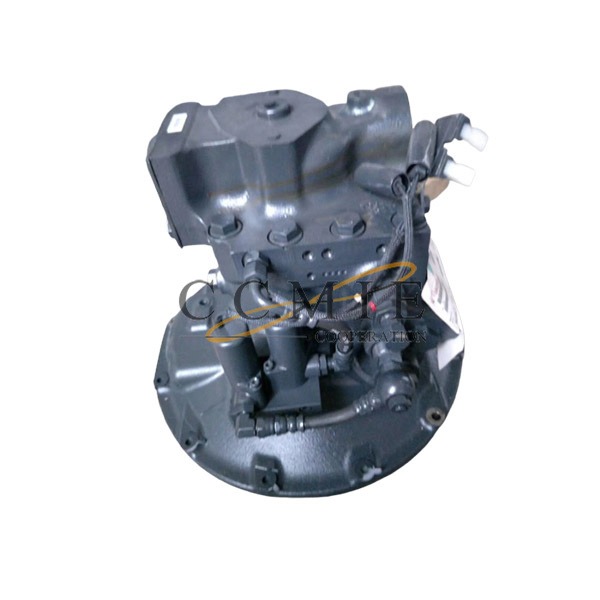
The Function of Excavator Port Overflow Valves
Excavator port overflow valves, commonly known in the industry as overload overflow valves, overload valves, or secondary overflow valves, are distinct from the main overflow valve (main overflow valve) at the pump port. Each set of actuating cylinder circuits is equipped with a separate valve, protecting only one actuator circuit. Let’s see the function of excavator port overflow valves.
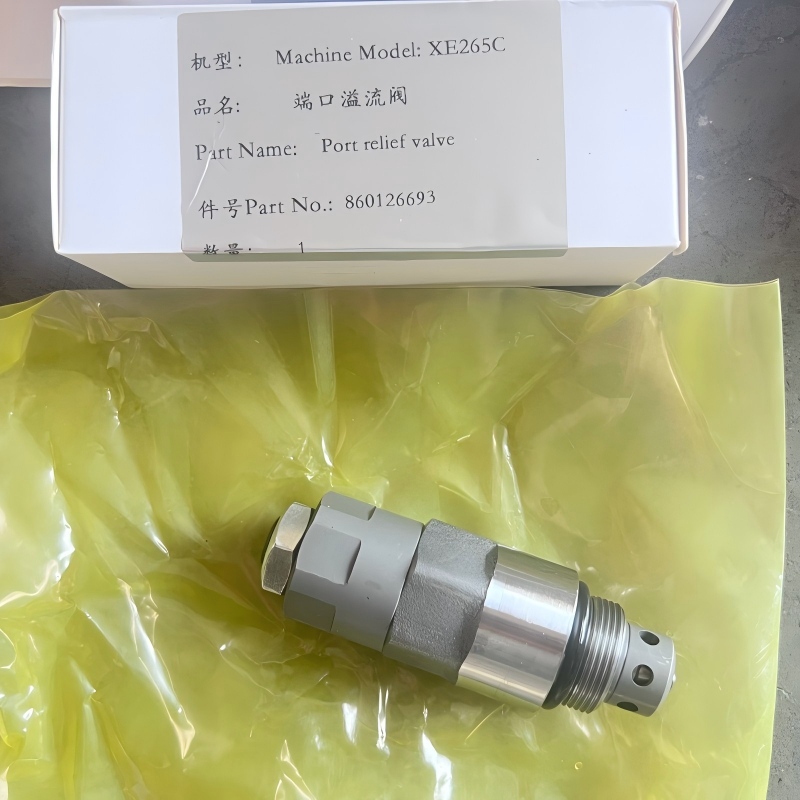
Installation Locations
Boom/Stick/Bucket (Excavating Working Device)
All integrated into the main control multi-way valve body. Corresponding to the cylinder outlet ports (oil ports from the valve core to the cylinder) of the boom, arm, and bucket valve cores. Each cylinder has two chambers, one large and one small; some models have one overload valve in each chamber.
Slewing and Travel Motors
Not mounted on the main control valve, but directly on the swing and travel motor bodies, protecting the motor circuits. And preventing start-stop shocks. And pressure build-up damage to the motor housing and reducer.
Supplementary Differentiation: Main Relief Valve vs. Port Overload Valve
Main Relief Valve (Main Pump): Installed at the main pump outlet/main control valve inlet. To controll the highest pressure of the entire system.
Port Overload Relief Valve (Secondary Pump): Located at each operating branch port. To individually protect a single cylinder/motor.
Four Core Functions
Overload Protection
Overload and Overpressure Protection (Most Core Function) .
The valve is closed during normal operation. When the bucket digs into a hard object, the cylinder reaches its bottom and becomes pressurized Or an external force impacts the working device, a high-pressure spike is instantly generated in the oil circuit.
When the pressure reaches the valve’s set value, the valve core immediately opens. And the high-pressure oil is discharged back to the oil tank, limiting the highest pressure of a single oil circuit and protecting the cylinder, oil pipes, joints. And motor from being cracked or deformed by high pressure.
Oil Replenishment and Cavitation Prevention
Negative Pressure Oil Replenishment to Prevent Cavitation and Cylinder Vacuuming:
During boom descent under its own weight, swing braking, and downhill travel, one chamber of the hydraulic cylinder/motor rapidly discharges oil. To create a momentary negative pressure vacuum in the other chamber.
The overload valve features a built-in one-way oil replenishment structure. Under negative pressure, the valve opens in reverse, drawing hydraulic oil from the return line to fill the cavity. To prevent air bubble cavitation, cylinder vibration and abnormal noise, and weak operation.
Action Buffering
Action Buffering to Reduce Impact and Vibration: Hydraulic shock occurs during digging, swing start/stop, and bucket landing. The overload valve quickly releases this instantaneous impact pressure, buffering vibration, reducing overall vehicle vibration. To improve operational smoothness, and reducing the risk of weld fatigue cracking in structural components.
Relief Pressure Relief
Branch Circuit Pressure Stabilization to Ensure Stable Single-Action Force:
When the digging load continuously increases, excess flow is returned to the oil tank through the overflow valve, maintaining a constant hydraulic pressure for that action. And ensuring stable digging force, preventing sudden fluctuations in force due to load changes.
Simple Fault Correlation
Overload valve pressure too low Corresponding action is weak, unable to dig.
Valve core stuck and normally open: slow action, severe pressure relief.
Oil replenishment one-way seal damaged: cylinder sinks, action vibrates, bubbling noise.
Our Advantages
China Construction Machinery Imp&Exp Co., Ltd., we specialize in delivering premium XCMG construction machinery and spare parts to global partners. Such as Indonesia, Zimbabwe, Papua New Guinea, Ghana, South Africa and so on.
With over 15 years of industry expertise, we provide tailored solutions for the following XCMG construction machinery:
(1)Earth moving machine: Excavator, Wheel loader, Bulldozer.
(2)Road building machine: Road roller, Motor Grader, Asphalt paver.
(3)Lifting machine: Truck crane, Truck mounted crane, Aerial working vehicles.
Whether you need equipment for mining projects or for urban infrastructure, we will recommend suitable machine model recommendations based on your specific engineering environment.